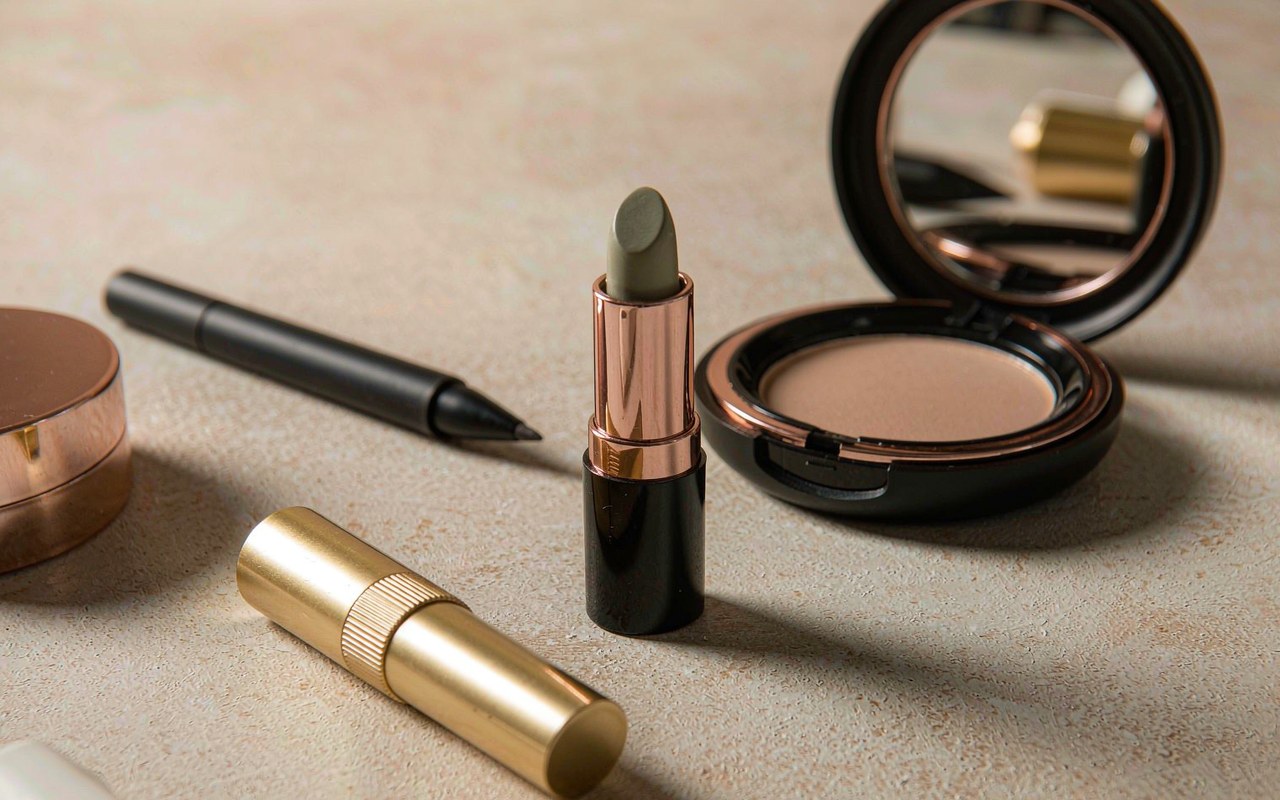
The makeup industry in 2026 is being reshaped by three forces at once: regulation on sustainability claims, a consumer who reads the ingredients list, and a social-native brand landscape that demands packaging to perform on camera. For brands and sourcing teams, each of these trends lands as a concrete packaging decision.
1. Clean beauty is now a packaging problem, not a marketing one
Clean beauty has moved from a niche claim to a baseline expectation. Retailers in the EU and North America increasingly require substantiation for terms like "natural", "recyclable" and "eco-friendly", and regulators are tightening the rules on green claims. That shift puts the packaging line under scrutiny: mono-material structures that separate cleanly, refillable systems that keep the outer shell in use, and coating chemistries with lower volatile organic compounds are no longer optional extras.
In practice, this means brands are asking for mono-material shells, removable metal inserts and snap-fit designs that disassemble without tools — because a package that cannot be separated will not be recycled, whatever the label says.
2. Refillable and reusable systems keep growing
Refill architecture has become the clearest expression of a brand's sustainability position. A compact or lipstick case designed to be kept — with the inner pan or bullet replaced — signals durability, justifies a premium price and builds a repeat-purchase relationship. The packaging challenge is mechanical: a refill mechanism must feel as precise on the tenth click as on the first, and the outer shell must survive year-round use without visible wear.
We are seeing this move fastest in powder compacts and lipsticks, where the refill is simple, tactile and easy to communicate on shelf.
3. PCR materials mature from pilot to production
Post-consumer recycled (PCR) resin has crossed the credibility gap. Where early PCR grades showed visible colour variation and inconsistent impact strength, today's qualified grades run from 30% to 100% content with mechanical performance validated per project. The remaining work is commercial and aesthetic: matching a brand's colourway exactly, and documenting the recycled content claim to a standard a retailer will accept.
For brands weighing the switch, the practical question is no longer "can PCR hold up?" but "which grade gives us the finish and colour we have already committed to?"
4. Bold colour and texture lead the shelf
After several years of muted minimalism, colour is back — but with a premium execution. Gradient effects, deep translucent tints, colour-matched caps and two-tone anodised barrels are being used to make a product photograph well, because the shelf is now a phone screen. This favours decoration processes that reproduce colour precisely at scale: gradient spray, UV printing and hot stamping matched to a Pantone or RAL target.
Decoration is also the easiest place to be let down. A finish that looks flawless in a render can fail on a curved surface at production volume — which is why finish selection belongs in the brief, not after tooling.
5. Skinification is reshaping categories
The line between makeup and skincare keeps blurring. Tinted treatments, serum-infused glosses and hybrid balms are creating packages that have to satisfy both worlds: the airless or sealed mechanisms of skincare, with the colour and material language of cosmetics. This is driving demand for sealed barrels, precise applicators and mechanisms validated over hundreds of cycles — technical requirements that only a manufacturer running its own tooling and assembly can hold consistently.
What this means for your next brief
Read together, the 2026 trends point in one direction: the packaging brief is becoming a technical document. Sustainably-positioned claims need mono-material and refillable engineering. Colour-led ranges need decoration processes qualified for production. Hybrid products need mechanisms proven at volume.
The brands that move fastest treat packaging as part of product strategy from day one — choosing a construction, a material and a finish together, rather than adding them at the end.
Planning a 2026 launch?
Send us your brief and our team will come back with constructions, MOQ and lead time within one business day.
Start Your Project