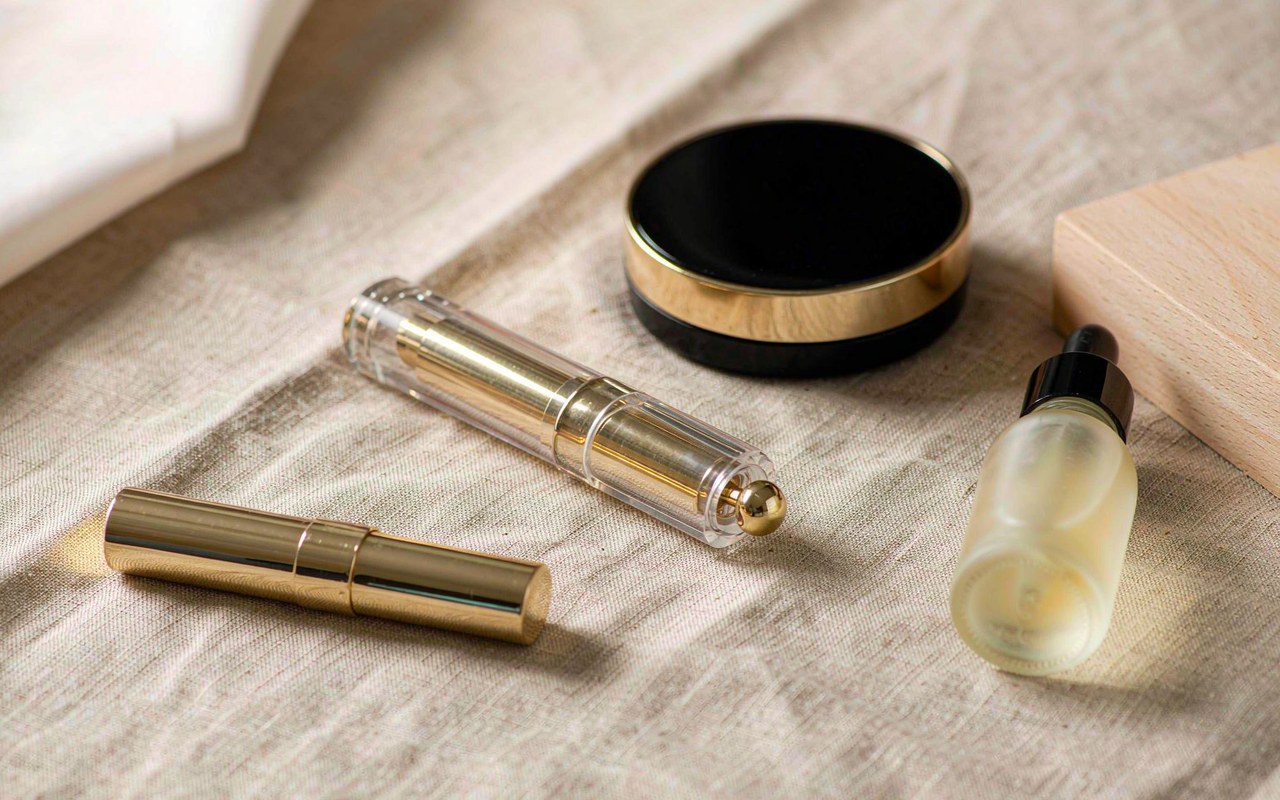
Most packaging problems are decided before the first drawing is made. Choose the format before the formula, and you spend the next year working around a fill nozzle that cannot reach the bottom of the jar. This guide walks through the order of decisions that keeps a cosmetic packaging project on schedule and on budget — from formula behaviour through to sampling.
1. Start with the formula, not the pack
The formula dictates more about the pack than any mood board. A high-viscosity cream needs a wide-mouth jar the consumer can get a finger into; a serum at 30 centipoise needs a dropper or pump that dispenses a controlled dose rather than a stream. Anhydrous formulas will attack some elastomers in pump seals, and anything containing a volatile silicone will find its way through a closure that is not engineered for it.
Before choosing a format, write down four things: viscosity at fill temperature, whether the product is water-based or anhydrous, the target dose per use, and whether the formula is oxygen- or light-sensitive. Those four answers eliminate most of the wrong options immediately. If the formula is on the boundary between, say, a lotion and a cream, sample both a pump and a tube — the fill line will usually settle the argument.
2. Match the format to how the product is used
Format follows usage occasion. A product applied on the move favours a stick or a compact, where the applicator is built into the pack and the consumer never touches the formula. A product applied at a dressing table can afford a jar and a separate spatula. A treatment used in small, metered doses rewards an airless or dropper system that protects the formula between uses.
It also pays to check the format against your category conventions. Walking the shelf of your target retailer tells you what the consumer already understands: if every competitor's blush is a compact, launching in a loose powder jar means teaching the customer a new behaviour. Sometimes that is the point — but it should be a deliberate decision, not an accident of tooling availability. Our packaging catalogue groups formats by category so you can see what already exists before committing to a custom development.
3. Choose the material for the whole journey
Material selection is usually argued on shelf appearance, but the decisive factors are compatibility, weight and end-of-life. Aluminium gives a premium cold-touch feel and takes anodising beautifully, but it dents and it is heavier per unit than plastic. ABS and other engineering plastics allow fine wall control and complex mechanisms, at the cost of a less premium hand-feel unless the surface is decorated carefully. Glass signals quality and is inert against most formulas, but it breaks and it costs more to ship.
Post-consumer recycled (PCR) blends have moved from pilot to production, and for many brands they are now the default for the outer shell rather than a sustainability statement. The practical question is not whether PCR is available but what percentage your formula's barrier requirement and your decoration process will tolerate. A frosted PCR jar takes a soft-touch coating well; a high-gloss hot-stamp finish is less forgiving of a variable substrate. If the product needs real barrier protection, an airless system with a PCR outer shell and a virgin inner contact layer is often the cleanest compromise.
4. Decide decoration early — it constrains everything
Decoration is where timelines quietly die. A gradient spray needs a smooth substrate and a masking step; hot stamping needs a flat enough face for the die to release cleanly; silk screen needs a surface the ink will key to. If you choose a heavily textured PCR material for sustainability reasons and then specify a high-gloss metallic logo, you will discover late that the two do not coexist without extra primer and cost.
The safer sequence is to pick the finish before the artwork is finalised. Bring your designer and your tooling engineer into the same conversation early: a two-colour injection-moulded shell can sometimes deliver the colour break you wanted from a post-decoration step, which removes a process, a lead time and a failure mode at once. For a deeper look at what each process can and cannot do, our customization studio walks through the available combinations.
5. Get the commercial boundaries before the design is locked
MOQ is not a single number — it is a function of mould cost, decoration setup and material minimums, and it moves depending on which of those you change. A pack that uses an existing mould has a very different entry point from one that requires new tooling. Ask for the MOQ broken down by component and by process, not as one headline figure, so you can see which part of the design is actually driving the minimum.
Sampling follows the same logic. Stock samples let you evaluate format and mechanism quickly and at low cost. Pre-production samples built on your final tooling and decoration are what you approve before mass production — and they should be produced on the same line that will run the order, because decoration appearance and closure feel vary between suppliers. Budget both stages into the schedule rather than treating sampling as a formality.
6. Brief the supplier like a project, not a purchase
The most reliable predictor of a smooth project is the quality of the brief. A supplier given only a photo and a quantity will make assumptions about tolerance, decoration and packaging that surface as problems later. A supplier given format, dimensions, material, finish, decoration, annual volume, filling method and launch date can flag feasibility issues in the first reply.
It also helps to say what you are optimising for. If the priority is launch speed, existing tooling with a custom decoration is usually fastest. If it is shelf differentiation, custom tooling is worth the lead time. If it is unit cost at scale, design for the mould rather than against it. Stating the priority lets the supplier propose the option that actually fits, instead of quoting the most expensive one because it was never told otherwise.
Ready to brief your packaging project?
Send us your format, material, finish and volume — our team reviews feasibility, tooling lead time and indicative pricing.
Request A Quote